A race car simulator, built by steering AI
A few weeks ago Ed posted on LinkedIn about a side project: a motorsport-class car physics model, with engine audio synthesised straight from the physics, built to see how far current AI models could go. The reaction was better than we expected. A few people also pointed out that the debug graphics were rough and the AI driver had problems, which we'd known about all through a very short build.
So we went back to it. The first version was built mostly with Fable 5.0 and took a few hours. OpenAI has since released Astra, which is strong at 3D work, so we used it for the second version: better graphics, a reworked AI driver, and a few fixes to the physics model along the way.
What's in the sim
The physics runs at 2,000 Hz and is representative of a real race car. There's a brush-model tyre with a thermally coupled tread and a pressure-dependent carcass, double-wishbone suspension with chassis compliance, and a 566 PS flat-six driving through a slipping clutch and a Salisbury differential. In the new version the tyre gives up grip as it slides, matching published slick data, where before it held a flat plateau past its peak.
The engine sound is synthesised from individual combustion cycles through a modelled exhaust, and the tyre squeal follows published squeal acoustics. What you hear comes from what the simulation is doing.
All the graphics apart from the logo and the font are generated in code. That includes the car.
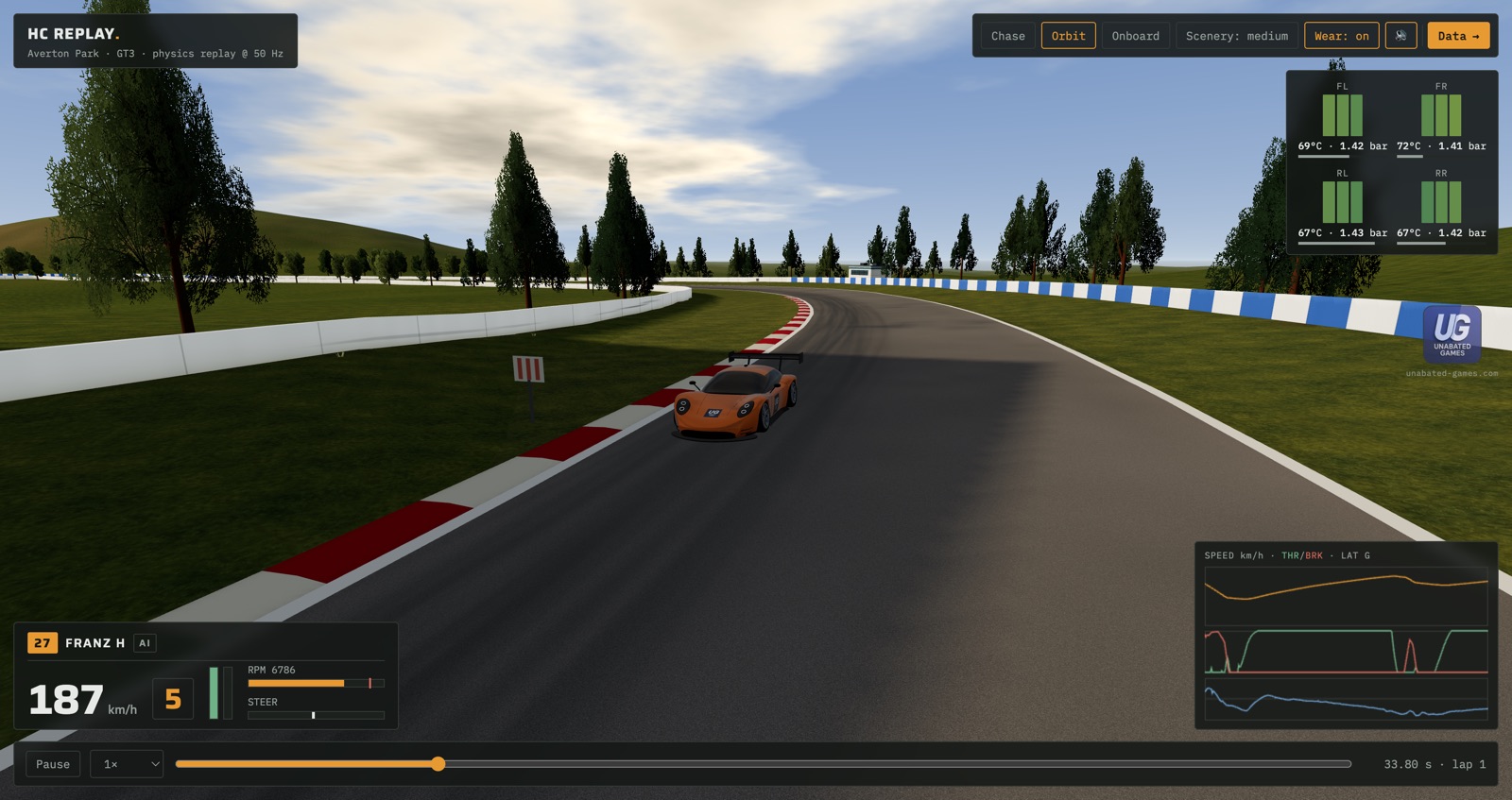
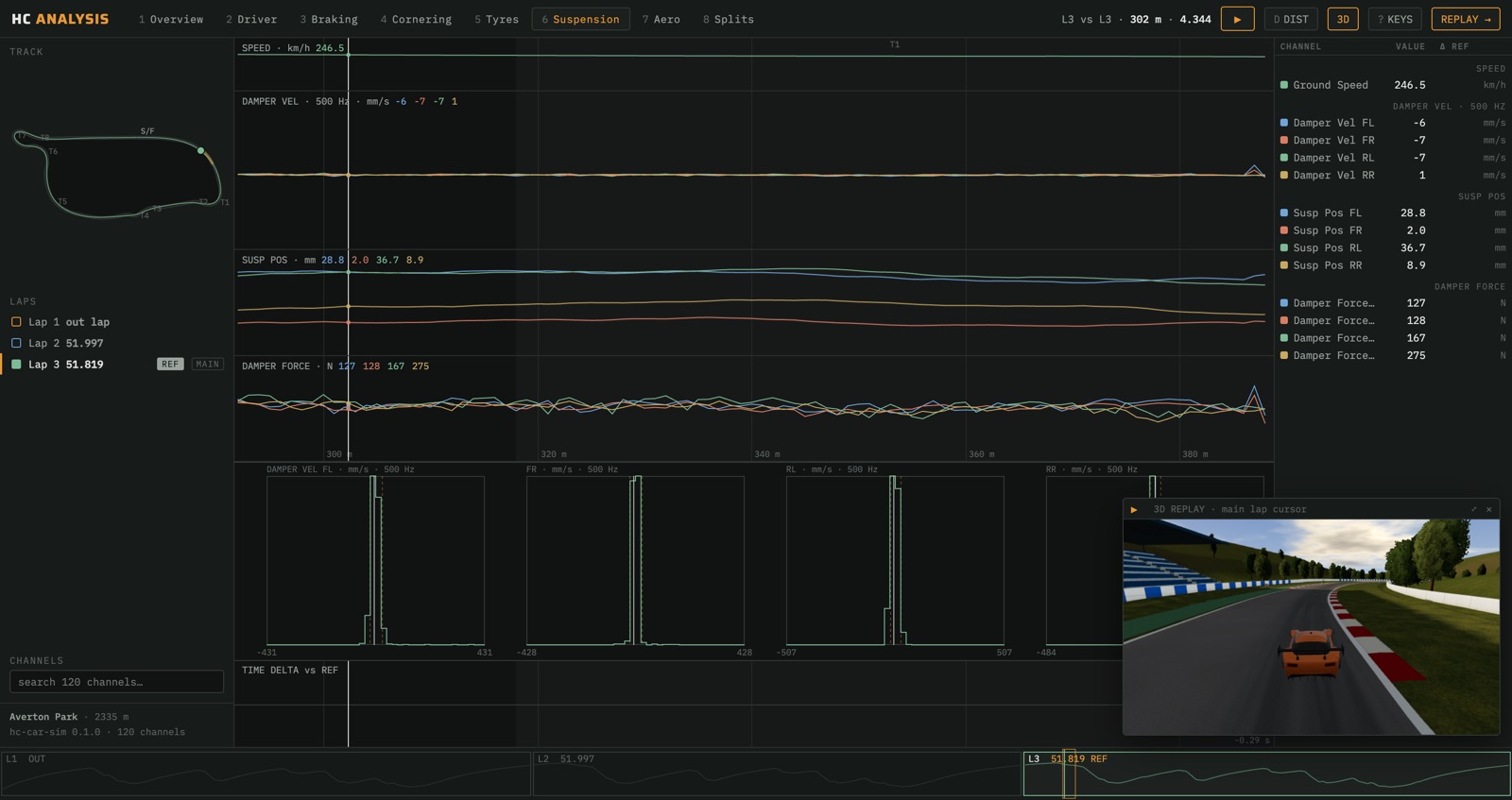
There's also a telemetry workbench now: 120 channels across eight pages, with any two laps overlaid and a running time delta. If you want to see what the physics model is doing, that's the place to look.
Why we built it
It isn't a product, and we're not building it towards anything. Most of our work is under NDA, and we wanted something people we know in games and in motorsport could look at.
What it shows is the method. Steer AI with real industry knowledge and it will build things well beyond the vibe-coded demos that get posted every day. In 2026, AI is a tool that helps you get real work done.
It runs in the browser at experiments.unabated-games.com. Start the replay with the sound up, and open Data in the top right for the telemetry. The services page covers the AI pipeline work we do for studios.